

Supporting Stroke Recovery with Vivistim
Recovering from a stroke is often a long and challenging journey, especially for those who experience lingering weakness in their arm and hand. At FAM Rehabilitation, we are committed to exploring solutions that help patients regain independence and improve quality of life during their stroke rehabilitation. One innovative option FAM has had the opportunity to integrate into our stroke rehabilitation program is Vivistim, a technology showing promising results for enhancing patients rehabilitation outcomes.
What is Vivistim?
Vivistim is an FDA-approved technology that combines vagus nerve stimulation (VNS) with traditional physical and occupational therapy rehabilitation exercises. The system involves a small, pacemaker-like device implanted under the skin in the chest, connected to the vagus nerve in the neck. During occupational therapy sessions, as patients perform targeted movements such as reaching, grasping, or lifting; the Vivistim device delivers gentle electrical pulses to the vagus nerve. This pairing helps the brain “rewire” itself through neuroplasticity, strengthening the connections needed for motor recovery.
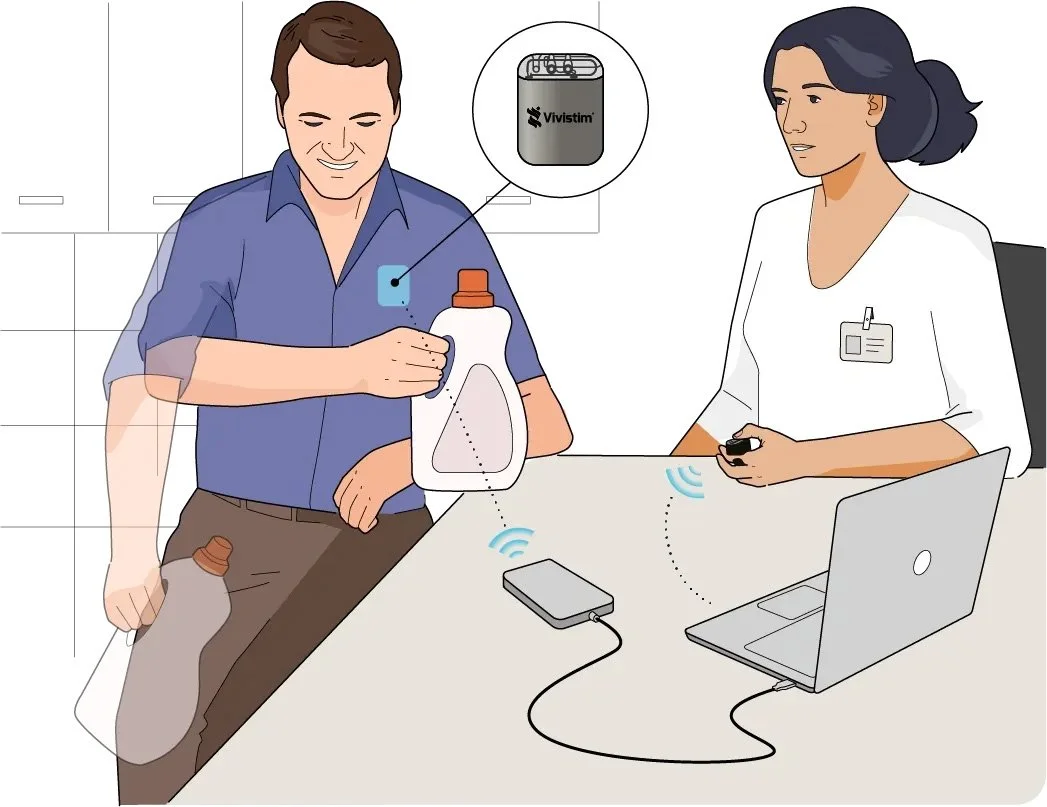
How FAM works with Vivistim Patients during their Rehabilitation
FAM’s therapists work closely with patients who have Vivistim implants to design individualized programs that maximize results. Here’s what that looks like in practice:
Targeted Exercises: During physical and occupational therapy sessions, we focus on repetitive, functional movements—such as grasping objects, dressing, or meal preparation—while activating the Vivistim device.
Real-Time Stimulation: Using a wireless transmitter, therapists trigger the device at key moments during exercises, reinforcing the brain’s ability to relearn these movements.
Home Integration: Patients can continue progress at home by activating Vivistim during daily activities, further promoting recovery outside the clinic.
Who Can Benefit?
Vivistim is designed for ischemic stroke survivors who:
Are at least six months post-stroke
Have moderate to severe upper limb impairment
Retain some movement in the wrist and fingers
Are motivated and able to participate in therapy sessions
Why This Matters
For many stroke survivors, recovery plateaus after the first year. Vivistim helps reopen the neuroplasticity window, offering hope even years after a stroke. Patients report improvements in daily tasks like dressing, cooking, and self-care activities that restore independence and confidence.
Looking Ahead
We’re proud to be a partner in our patients stroke rehabilitation journey and Vivistim is an exciting addition to the Physical and Occupational Therapist’s toolkit. If you or a loved one is interested in learning more about Vivistim and whether it’s right for you, contact FAM Rehabilitation for more information.